Smile
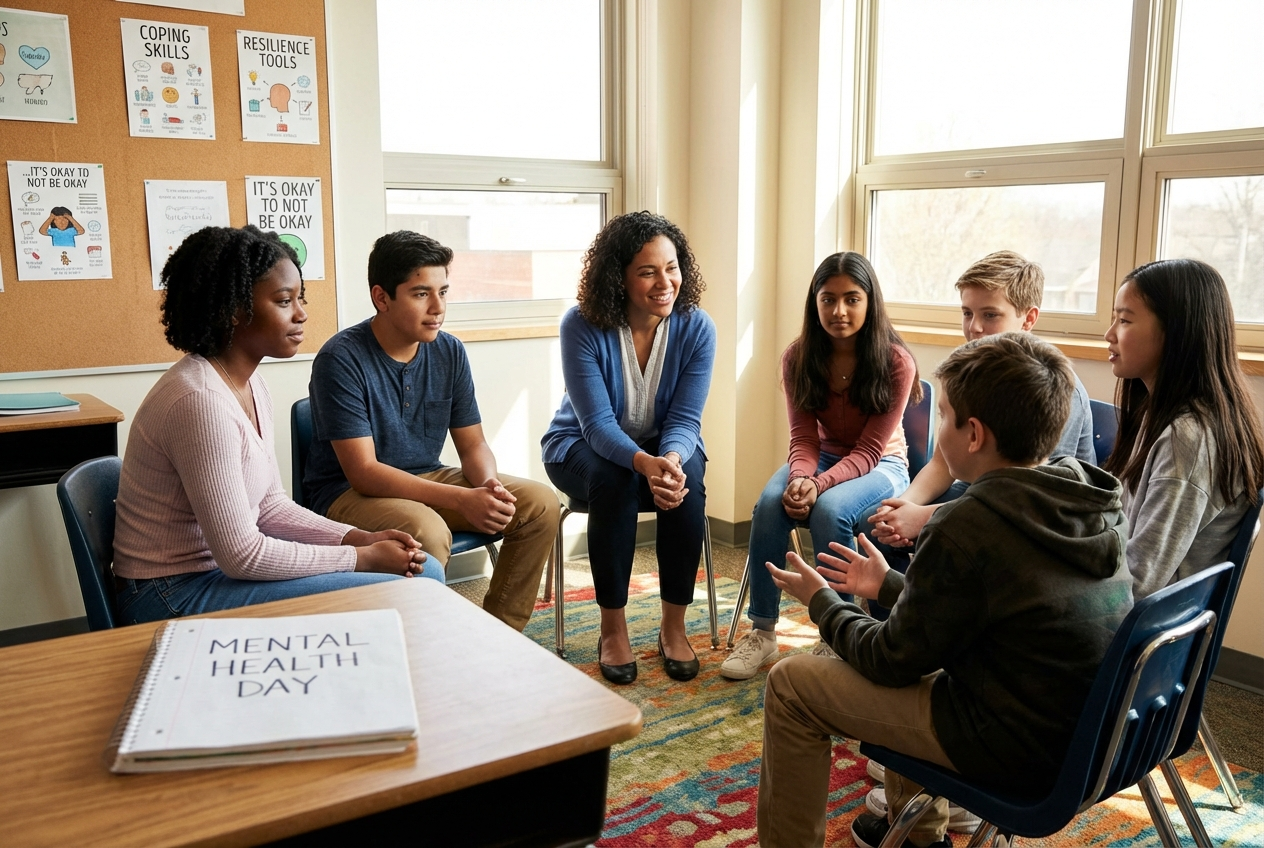
Schools Balance Mental Health and Resilience

Quick Smiles:
- Schools now encourage open conversations about mental health.
- Experts say balancing compassion and resilience builds stronger students.
- Growing awareness helps children learn vital coping skills.
For generations, children were often told to push aside emotional struggles, but today’s classrooms encourage students to notice, name, and share their feelings. Parents and educators widely embrace this positive change, supporting children as they learn to ask for help and manage emotions.
Recently, discussions have emerged about finding the right balance between supporting kids’ mental health and teaching resilience. Samantha Jo Payne, a former teacher in Indiana, expressed concerns about students taking frequent mental health days and the impact on their sense of responsibility.
“There were times a student would be out sick, and when they returned, I’d say, ‘I hope you feel better,’ only to hear, ‘Oh, I’m fine. I just didn’t feel like coming, and my mom said I could stay home,’” Payne recalls.
She believes everyday challenges should not always be reasons to stay home, emphasizing the importance of learning to cope rather than avoid. Many responded to Payne’s viewpoint, with some agreeing and others emphasizing the challenges of managing real mental health conditions at home.
“As an adult with an anxiety disorder, allowing students to successfully avoid whenever their anxiety is bad enough is SO HARMFUL for their mental health!” one viewer wrote.
Another countered, “I’m sorry but I don’t take advice on this from anyone who hasn’t also had to hospitalize their kid before. legitimate mental health struggles are scary, and we do what we can to balance priorities.”
Dr. Deborah Gilboa, a family physician and resilience expert, explains it’s not an either-or decision. She encourages using careful judgment to decide when kids need rest and when they benefit from persisting through tough moments.
“Sometimes kids genuinely need rest and recovery for mental distress,” Gilboa tells TODAY. “And sometimes what they need is to build perseverance and resilience by pushing through it.”
Gilboa also highlights the value of school as a place for children to learn how to handle responsibilities and challenges. She agrees that avoidance can be an issue, but cautions against minimizing the importance of mental health compared to physical illness.
“I’d want to be careful about the idea that physical illness is always valid and mental illness is not,” Gilboa says. “Mental distress and mental illness are very real and they deserve to be taken seriously.”
With honest conversations and thoughtful support, families and educators continue to help kids grow into healthy, resilient adults. Let’s celebrate every effort that strengthens children’s well-being—both emotionally and academically!

-

 Cute Animals3 years ago
Puppy Love Patrol: Service Dog Swoons Over K9 Officer Neighbor
-
 Cute Animals3 years ago
Hugs, Hooves, and Happiness: Newborn Donkey Steals Hearts by Demanding Affection [Video]
-

 Cute Animals3 years ago
WATCH: A German Shepherd’s Surprising Parenting Instinct for Lost Ducklings!
-

 Cute Animals3 years ago
Petty Pup Pulls Off Hilarious Bone Heist [Video]
-

 Cute Animals3 years ago
“Pure Love”: Adopted Rescue Dog Can’t Hide How Grateful He Is [Video]
-

 Heroes3 years ago
A Lost Dog’s Bark Leads to a Lifesaving Discovery
-

 Cute Animals3 years ago
Tiny but Mighty: Cat with Dwarfism Becomes Internet Star as Owners Adapt Backyard for Her Comfort
-

 Cute Animals3 years ago
Adorable Puppy Steals Hearts After a Tiring Swim [Video]