Smile
Ancient Wisdom Rises From the Ashes: Lost Stoic Philosophy Miraculously Recovered After 2,000 Years

Quick Smiles:
- AI technology unlocks 2,000-year-old scrolls buried by Mount Vesuvius, revealing lost ancient wisdom
- Previously unknown Stoic philosopher’s insights discovered, expanding our understanding of classical thought
- Groundbreaking scientific innovation brings history back to life in the most heartwarming way
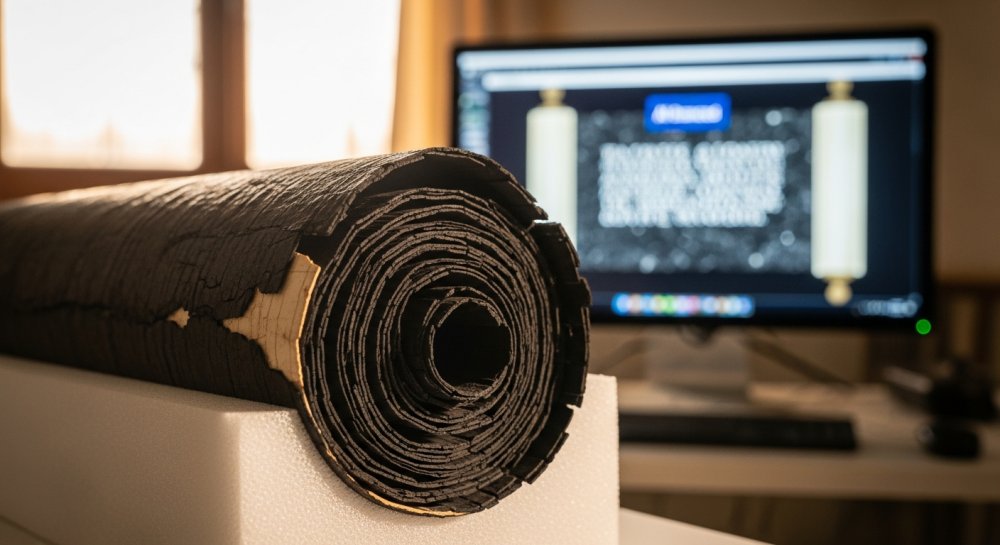
In a discovery that feels like pure magic meeting modern science, researchers have successfully decoded more ancient scrolls carbonized by the same volcanic eruption that buried Pompeii nearly two millennia ago. The recovered texts include profound ruminations on Stoic philosophy by a previously unknown author—a voice lost to history now speaking to us across the centuries.
The scrolls, which were turned to charcoal when Mount Vesuvius erupted in 79 AD, have long been considered impossible to read without destroying them. But thanks to revolutionary advancements in particle acceleration technology and artificial intelligence, scientists can now peer inside these fragile artifacts without ever unrolling them.
Among the latest revelations is the identification of “Book 8” from a work titled On Gods, written by the Greek philosopher Philodemus. The discovery represents a missing piece of ancient literary history that scholars believed was lost forever.
What makes this breakthrough especially touching is how it connects us to the everyday people of the ancient world. These weren’t just abstract academic texts—they were personal libraries, cherished collections that someone valued enough to keep in their home.
The unknown Stoic philosopher whose words have now been recovered offers timeless wisdom about resilience, virtue, and the human condition. Their insights, preserved by volcanic ash and unlocked by cutting-edge technology, remind us that human nature and our quest for meaning haven’t changed in two thousand years.
The Herculaneum papyri, as they’re known, represent one of the only intact libraries to survive from classical antiquity. The villa where they were found was buried so quickly that hundreds of scrolls were carbonized in place, creating a time capsule of ancient thought.
For decades, scholars could only dream of reading these texts. Traditional methods would have destroyed the delicate scrolls. But the combination of advanced particle accelerators that can scan the internal structure of the rolls, paired with AI algorithms trained to recognize ancient handwriting patterns, has made the impossible possible.
Each new text recovered is like finding a treasure chest of human knowledge. The Stoic philosophy being revealed emphasizes concepts of inner peace, acceptance, and personal excellence—messages that resonate just as powerfully today as they did in ancient Rome.
The research team continues to work through hundreds of scrolls, and experts believe many more literary treasures await discovery. Each breakthrough brings us closer to understanding the rich intellectual life of the ancient world and the timeless wisdom our ancestors preserved.
This beautiful marriage of ancient wisdom and modern technology proves that some things are worth waiting for. After 2,000 years of silence, these voices are finally being heard again—and they still have so much to teach us.

-
 Cute Animals3 years ago
Puppy Love Patrol: Service Dog Swoons Over K9 Officer Neighbor
-
 Cute Animals3 years ago
Hugs, Hooves, and Happiness: Newborn Donkey Steals Hearts by Demanding Affection [Video]
-

 Cute Animals3 years ago
WATCH: A German Shepherd’s Surprising Parenting Instinct for Lost Ducklings!
-

 Cute Animals3 years ago
Petty Pup Pulls Off Hilarious Bone Heist [Video]
-

 Cute Animals3 years ago
“Pure Love”: Adopted Rescue Dog Can’t Hide How Grateful He Is [Video]
-

 Heroes3 years ago
A Lost Dog’s Bark Leads to a Lifesaving Discovery
-
 Cute Animals3 years ago
Tiny but Mighty: Cat with Dwarfism Becomes Internet Star as Owners Adapt Backyard for Her Comfort
-

 Cute Animals3 years ago
Adorable Puppy Steals Hearts After a Tiring Swim [Video]