Smile
Ancient Cave Discovery Reveals Jaw-Dropping Secret About How We Breathe Today

Quick Smiles:
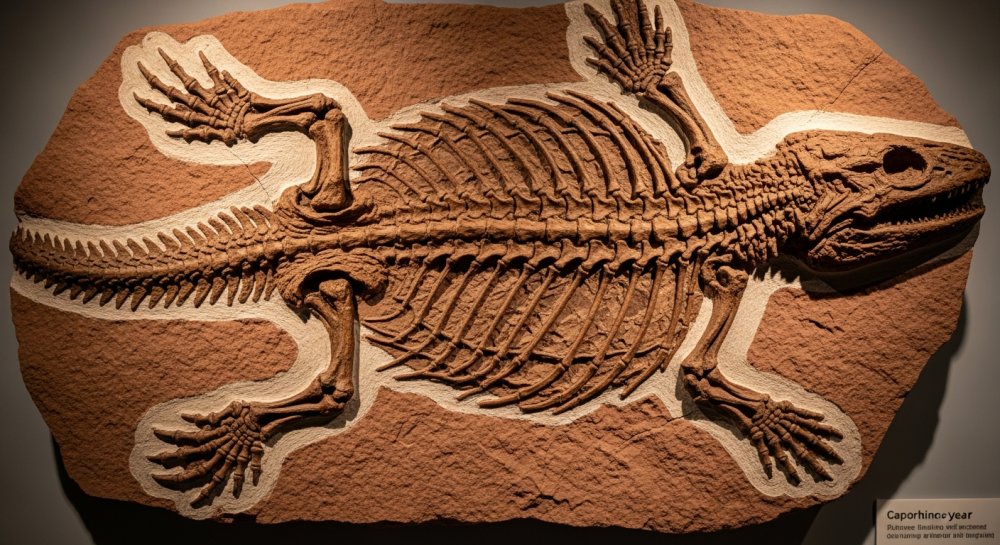
- Remarkably preserved 289-million-year-old reptile fossil found in Oklahoma cave shows incredible detail
- Ancient creature’s mummified skin, scales, and proteins survived intact through the ages
- Scientists discover earliest known evidence of how lungs functioned—the same way yours work right now
Every breath you take is part of a very ancient story, and a remarkably preserved reptile that died in an Oklahoma cave about 289 million years ago has revealed something truly heartwarming about our shared biological heritage. The steady movement of your chest, the muscles between your ribs pulling outward, and the air filling your lungs may feel completely routine, yet this familiar process connects us to life from hundreds of millions of years ago.
The fossil, so exceptionally preserved that scientists are calling it “mummified,” offers an unprecedented window into ancient life. Unlike typical fossils that only preserve bones, this extraordinary specimen retained its skin, scales, and even proteins—a level of preservation that rarely occurs in the fossil record.
What makes this discovery particularly uplifting is what it reveals about the continuity of life on Earth. The ancient reptile’s lung function operated on the same fundamental principles that allow you to breathe today, demonstrating an elegant biological design that has stood the test of time across nearly 300 million years.
The Oklahoma cave where this creature took its final rest provided the perfect conditions for this miraculous preservation. The unique environment protected the remains from decay and the elements, creating a natural time capsule that would eventually gift modern science with invaluable insights into early vertebrate life.
Researchers studying the specimen have been able to examine soft tissue details that are almost never available in paleontology. The preserved scales show intricate patterns, while the protein analysis opens new doors for understanding ancient biochemistry and how life evolved over vast stretches of time.
This discovery reminds us of the beautiful interconnectedness of all life and how the fundamental processes that keep us alive have ancient roots. Every breath we take links us to countless generations of creatures who came before, adapting and thriving through Earth’s long history.
For scientists, this fossil represents a treasure trove of information about early respiratory systems and how vertebrates adapted to life on land. For the rest of us, it’s a touching reminder that we’re part of an unbroken chain of life stretching back through deep time.

-

 Cute Animals3 years ago
Puppy Love Patrol: Service Dog Swoons Over K9 Officer Neighbor
-
 Cute Animals3 years ago
Hugs, Hooves, and Happiness: Newborn Donkey Steals Hearts by Demanding Affection [Video]
-

 Cute Animals3 years ago
WATCH: A German Shepherd’s Surprising Parenting Instinct for Lost Ducklings!
-

 Cute Animals3 years ago
Petty Pup Pulls Off Hilarious Bone Heist [Video]
-

 Cute Animals3 years ago
“Pure Love”: Adopted Rescue Dog Can’t Hide How Grateful He Is [Video]
-

 Heroes3 years ago
A Lost Dog’s Bark Leads to a Lifesaving Discovery
-
 Cute Animals3 years ago
Tiny but Mighty: Cat with Dwarfism Becomes Internet Star as Owners Adapt Backyard for Her Comfort
-

 Cute Animals3 years ago
Adorable Puppy Steals Hearts After a Tiring Swim [Video]