Smile
Scientists May Have Just Spotted Something Incredible Orbiting a Distant Star

Quick Smiles:
- Astronomers may have detected the first-ever moon outside our solar system, orbiting a distant exoplanet
- The discovery could revolutionize our understanding of how planetary systems form across the universe
- This breakthrough follows decades of exoplanet discoveries that started with a single confirmed world in the 1990s
When astronomer Aleksander Wolszczan confirmed the observation of the first planet outside our solar system decades ago, he immediately predicted thousands more would follow. Now 80 years old, Wolszczan’s prediction has proven remarkably accurate—and the latest discovery may be even more extraordinary than anyone imagined.
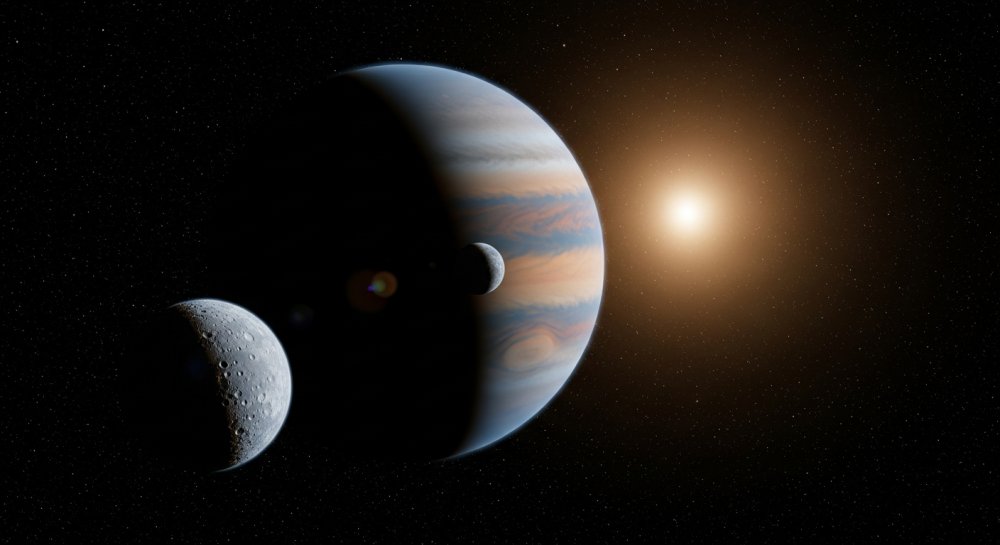
Scientists believe they may have detected the first known “exomoon”—a moon orbiting a planet beyond our solar system. This potential breakthrough represents a monumental leap in our understanding of cosmic architecture and planetary formation.
The discovery centers on the CD-35 2722 system, where researchers observed unusual patterns suggesting a moon-like body circling an exoplanet. Just as our own solar system boasts hundreds of moons orbiting various planets, astronomers have long theorized that distant star systems should harbor their own lunar companions.
What makes this detection so thrilling is the technical challenge involved. Exoplanets themselves are incredibly difficult to spot, typically revealed only through subtle dips in starlight as they pass in front of their host stars.
Detecting an exomoon requires identifying even fainter signals—like finding a firefly next to a spotlight from thousands of miles away.
The research team used advanced observational techniques and cutting-edge telescopes to identify the telltale signatures that suggest a moon’s presence. While astronomers remain cautiously optimistic pending further confirmation, the evidence is compelling enough to generate excitement throughout the scientific community.
This potential discovery opens extraordinary possibilities for future exploration. If exomoons are common throughout the galaxy, they could provide additional environments where conditions might support life.
Some of the most promising candidates for extraterrestrial life in our own solar system are moons—like Jupiter’s Europa and Saturn’s Enceladus—which harbor subsurface oceans beneath icy shells.
The journey from Wolszczan’s first exoplanet confirmation to this possible exomoon detection illustrates humanity’s accelerating ability to probe the cosmos. What once seemed impossibly distant is now coming into focus, one discovery at a time.
As telescope technology continues advancing and observation methods grow more sophisticated, astronomers expect to confirm not just this exomoon, but potentially hundreds more in the years ahead. Each discovery brings us closer to answering fundamental questions about our place in the universe.
The cosmos continues revealing its wonders, reminding us that exploration and discovery remain among humanity’s most uplifting pursuits.

-

 Cute Animals3 years ago
Puppy Love Patrol: Service Dog Swoons Over K9 Officer Neighbor
-
 Cute Animals3 years ago
Hugs, Hooves, and Happiness: Newborn Donkey Steals Hearts by Demanding Affection [Video]
-

 Cute Animals3 years ago
WATCH: A German Shepherd’s Surprising Parenting Instinct for Lost Ducklings!
-

 Cute Animals3 years ago
Petty Pup Pulls Off Hilarious Bone Heist [Video]
-

 Cute Animals3 years ago
“Pure Love”: Adopted Rescue Dog Can’t Hide How Grateful He Is [Video]
-

 Heroes3 years ago
A Lost Dog’s Bark Leads to a Lifesaving Discovery
-

 Cute Animals3 years ago
Tiny but Mighty: Cat with Dwarfism Becomes Internet Star as Owners Adapt Backyard for Her Comfort
-

 Cute Animals3 years ago
Adorable Puppy Steals Hearts After a Tiring Swim [Video]