Smile
Ancient Egyptian Tomb Discovered with Breathtaking 3,200-Year-Old Frescoes Still Intact—This Will Leave You Amazed

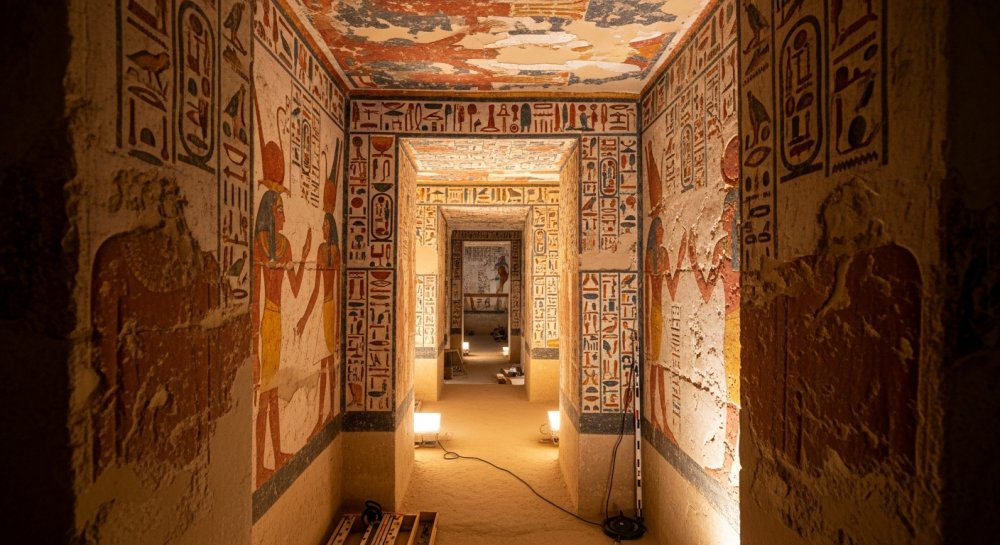
Quick Smiles:
- Dutch-Egyptian team unearths stunning 3,200-year-old tomb in Luxor with perfectly preserved interior artwork
- T-shaped burial chamber dates back to the reign of legendary pharaoh Ramses II
- Discovery combines cutting-edge conservation with archaeological exploration at historic Theban Necropolis
In a discovery that bridges three millennia, archaeologists working in Egypt’s famed Valley of the Kings have unveiled a spectacular ancient tomb adorned with vibrant frescoes that have survived intact for over 3,200 years. The breathtaking find offers a stunning window into life during one of ancient Egypt’s most glorious eras.
A collaborative team of Dutch and Egyptian archaeologists made the extraordinary discovery while conducting excavations at the Theban Necropolis in Luxor. The tomb, featuring the distinctive T-shaped design characteristic of the period, represents a remarkable example of funerary architecture from the time of the great pharaohs.
What makes this discovery particularly special is the exceptional condition of the interior frescoes and decorations. Despite more than three thousand years underground, the artwork retains much of its original beauty and detail, offering researchers invaluable insights into ancient Egyptian artistry and religious beliefs.
The excavation is part of an innovative long-term project that uniquely combines proactive conservation strategies with traditional archaeological methods. This forward-thinking approach ensures that precious artifacts and structures are protected even as they’re being uncovered and studied.
Hisham El-Leithy, Secretary-General of Egypt’s Supreme Council of Antiquities, announced the discovery with evident pride. The find adds to Luxor’s reputation as one of the world’s richest archaeological treasures, with new discoveries emerging regularly from the ancient sands.
The tomb dates back to the era of Ramses II, often called Ramses the Great, who reigned during Egypt’s New Kingdom period. This was a time of unprecedented prosperity, monumental building projects, and cultural achievement that continues to captivate the world today.
For history enthusiasts and archaeology lovers, the discovery represents yet another chapter in humanity’s ongoing conversation with its ancient past. Each new find in Luxor reminds us that countless stories still lie beneath the desert, waiting to share their secrets with future generations.
The Theban Necropolis, where the tomb was found, served as the burial ground for pharaohs, nobles, and high-ranking officials for centuries. Its continued yielding of treasures underscores the site’s immense historical significance and the wisdom of ongoing preservation efforts.

-

 Cute Animals3 years ago
Puppy Love Patrol: Service Dog Swoons Over K9 Officer Neighbor
-
 Cute Animals3 years ago
Hugs, Hooves, and Happiness: Newborn Donkey Steals Hearts by Demanding Affection [Video]
-

 Cute Animals3 years ago
WATCH: A German Shepherd’s Surprising Parenting Instinct for Lost Ducklings!
-

 Cute Animals3 years ago
Petty Pup Pulls Off Hilarious Bone Heist [Video]
-

 Cute Animals3 years ago
“Pure Love”: Adopted Rescue Dog Can’t Hide How Grateful He Is [Video]
-

 Heroes3 years ago
A Lost Dog’s Bark Leads to a Lifesaving Discovery
-

 Cute Animals3 years ago
Tiny but Mighty: Cat with Dwarfism Becomes Internet Star as Owners Adapt Backyard for Her Comfort
-

 Cute Animals3 years ago
Adorable Puppy Steals Hearts After a Tiring Swim [Video]