Cute Animals
Rare Birds Return Home After 60 Years – Their Comeback Will Warm Your Heart

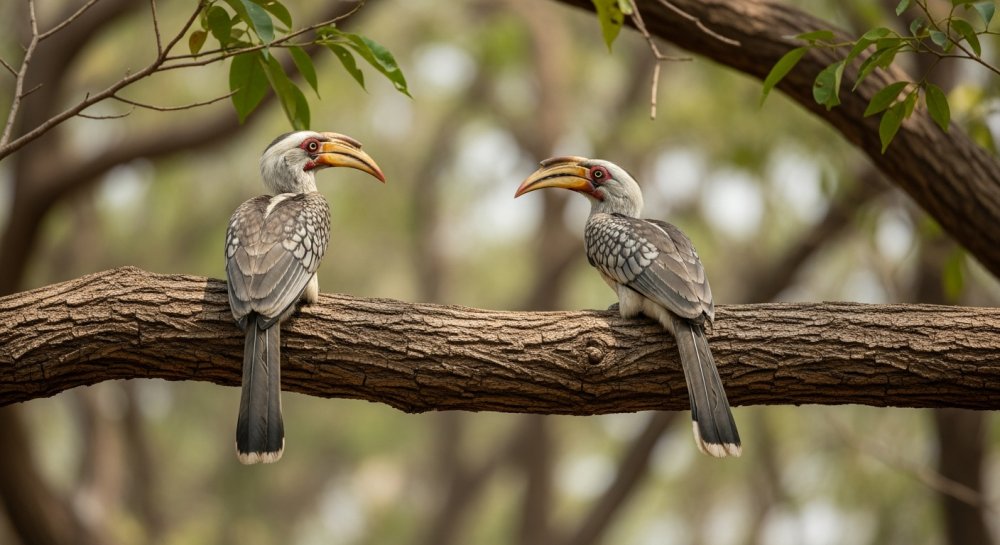
Quick Smiles:
- Indian grey hornbills are successfully breeding in Gujarat for the fourth straight year after vanishing for over half a century
- The birds require very specific old-growth forest habitats with mature trees for nesting
- Conservation efforts have created a self-sustaining population, proving nature can heal with the right support
After more than 60 years of absence, Indian grey hornbills are thriving once again in Gujarat state, marking four consecutive years of successful breeding. The heartwarming wildlife comeback story demonstrates how dedicated conservation efforts can restore balance to ecosystems that seemed permanently altered.
The distinctive birds, with their curved beaks and striking grey plumage, had completely disappeared from the region decades ago. Despite being classified as a species of “Least Concern” globally by the International Union for Conservation of Nature, these hornbills have very particular habitat needs that make them vulnerable to displacement.
The birds require mature, old-growth forests with large tree cavities for nesting – resources that have become increasingly scarce across many regions. Even protected areas like Gir National Park had lost their hornbill populations as suitable nesting sites disappeared over time.
Conservation teams worked diligently to restore appropriate habitat conditions and create environments where the hornbills could return and establish breeding populations. The effort has paid off beautifully, with the birds now successfully raising young for four years running.
The self-sustaining population represents a major milestone in regional wildlife recovery. Each breeding season brings new hope that these remarkable birds will continue to grace Gujarat’s forests for generations to come.
The hornbills’ return also benefits the broader ecosystem, as the birds play important roles in seed dispersal and forest regeneration. Their presence indicates a healthy, functioning habitat that supports diverse wildlife.
This uplifting conservation success story reminds us that with patience, dedication, and proper habitat management, species that seemed lost forever can make triumphant returns to their ancestral homes.

-

 Cute Animals3 years ago
Puppy Love Patrol: Service Dog Swoons Over K9 Officer Neighbor
-
 Cute Animals3 years ago
Hugs, Hooves, and Happiness: Newborn Donkey Steals Hearts by Demanding Affection [Video]
-

 Cute Animals3 years ago
WATCH: A German Shepherd’s Surprising Parenting Instinct for Lost Ducklings!
-

 Cute Animals3 years ago
Petty Pup Pulls Off Hilarious Bone Heist [Video]
-

 Cute Animals3 years ago
“Pure Love”: Adopted Rescue Dog Can’t Hide How Grateful He Is [Video]
-

 Heroes3 years ago
A Lost Dog’s Bark Leads to a Lifesaving Discovery
-
 Cute Animals3 years ago
Tiny but Mighty: Cat with Dwarfism Becomes Internet Star as Owners Adapt Backyard for Her Comfort
-

 Cute Animals3 years ago
Adorable Puppy Steals Hearts After a Tiring Swim [Video]