Smile
Scientists Just Discovered a Planet Where Morning Clouds Are Made of Literal Rock — And It’s Absolutely Mind-Blowing

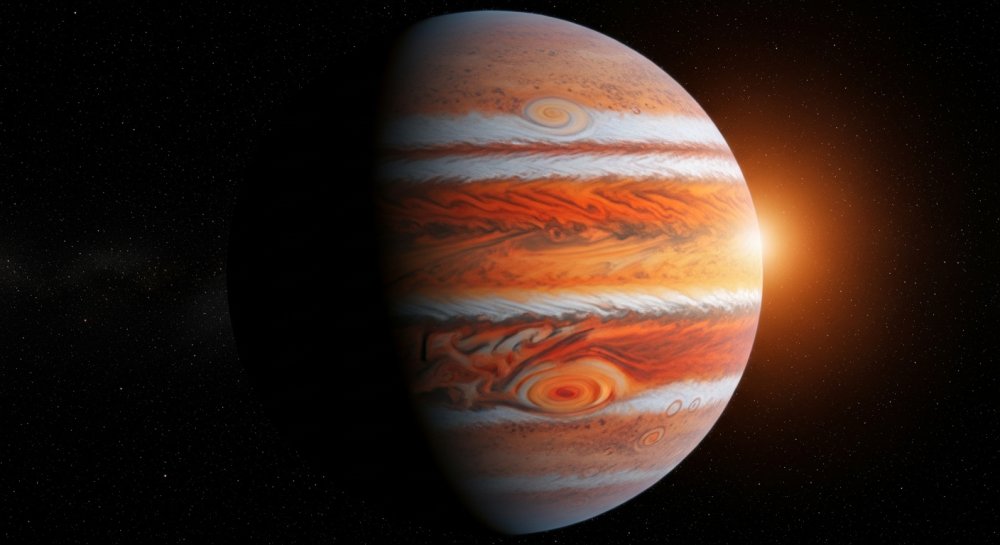
Quick Smiles:
- James Webb Space Telescope reveals a distant planet with clouds made of stone that melt and reform daily
- Johns Hopkins researchers explore exotic Hot Jupiter planets, expanding our cosmic understanding
- Discovery showcases humanity’s incredible progress in studying worlds beyond our solar system
Imagine waking up each morning to clouds made of rock that literally melt as the day begins. That’s the extraordinary reality on WASP-94A b, a fascinating gas giant planet that’s capturing the imagination of scientists and space enthusiasts alike.
Thanks to the powerful James Webb Space Telescope, researchers at Johns Hopkins University have been exploring the atmospheres of several “Hot Jupiters” located in the Microscopium constellation. These massive planets orbit extremely close to their host stars, creating conditions unlike anything we experience here on Earth.
WASP-94A b stands out as particularly remarkable among these distant worlds. The planet’s unique atmospheric conditions create clouds composed of rock particles that undergo a daily transformation.
As the planet’s surface heats up, these stone clouds vaporize into gas, only to condense and reform as the temperature drops — a cosmic cycle that repeats endlessly.
The discovery represents another triumph for humanity’s expanding exploration of exoplanets — worlds orbiting stars beyond our own Sun. The James Webb Space Telescope continues to revolutionize our understanding of these distant planetary systems, revealing details that were impossible to detect just years ago.
Hot Jupiters like WASP-94A b offer scientists invaluable insights into planetary formation and atmospheric dynamics. These gas giants, despite their extreme conditions, help researchers understand the incredible diversity of worlds that exist throughout our galaxy.
The Johns Hopkins team’s ongoing research in the Microscopium constellation demonstrates how far astronomical science has progressed. What once seemed like pure science fiction — studying the weather patterns on planets light-years away — has become scientific reality.
This remarkable discovery reminds us that the universe contains wonders beyond our wildest imagination, and that human curiosity and ingenuity continue to unlock its secrets one breakthrough at a time.

-

 Cute Animals3 years ago
Puppy Love Patrol: Service Dog Swoons Over K9 Officer Neighbor
-
 Cute Animals3 years ago
Hugs, Hooves, and Happiness: Newborn Donkey Steals Hearts by Demanding Affection [Video]
-

 Cute Animals3 years ago
WATCH: A German Shepherd’s Surprising Parenting Instinct for Lost Ducklings!
-

 Cute Animals3 years ago
Petty Pup Pulls Off Hilarious Bone Heist [Video]
-

 Cute Animals3 years ago
“Pure Love”: Adopted Rescue Dog Can’t Hide How Grateful He Is [Video]
-

 Heroes3 years ago
A Lost Dog’s Bark Leads to a Lifesaving Discovery
-

 Cute Animals3 years ago
Tiny but Mighty: Cat with Dwarfism Becomes Internet Star as Owners Adapt Backyard for Her Comfort
-

 Cute Animals3 years ago
Adorable Puppy Steals Hearts After a Tiring Swim [Video]