Smile
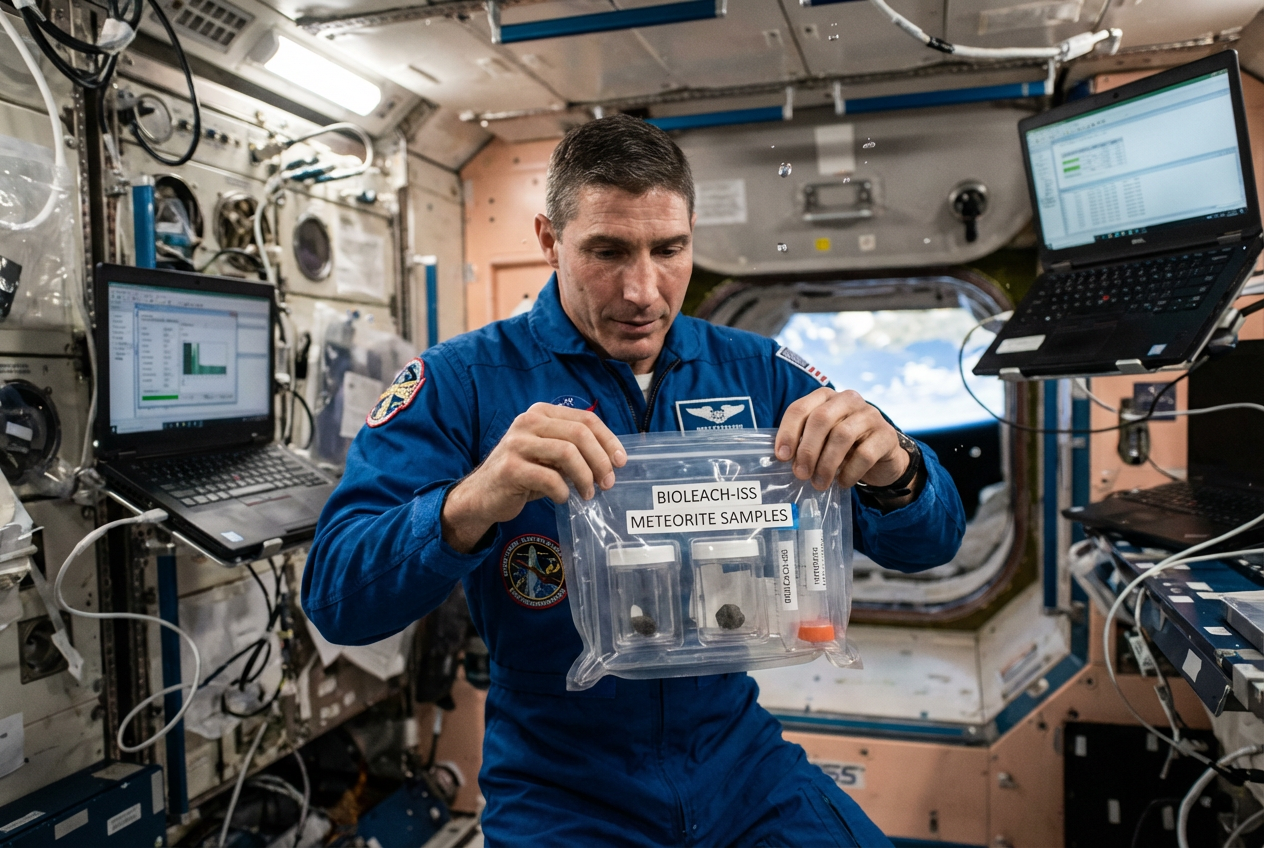
Astronaut Microbes Mine Precious Metals in Space

Quick Smiles:
- NASA astronaut extracts platinum from meteorites aboard ISS
- Microgravity boosts microbe mining efficiency
- Space tech advances with bioleaching breakthrough
NASA astronaut Michael Hopkins conducted a pioneering experiment on the International Space Station, using microbes to extract valuable platinum and palladium from L-chondrite meteorite samples.
Researchers from Cornell and Edinburgh universities confirmed the process works even better in microgravity, as the fungus Penicillium simplicissimum enhanced uptake of these precious metals.
The microbes produce carboxylic acids that bind to minerals, making bioleaching—a promising method for harvesting space resources—more effective beyond Earth.
Nonbiological methods proved less successful in space, highlighting nature’s clever advantage.
“Another complex but very interesting result, I think, is the fact that the extraction rate changes a lot depending on the metal that you are considering, and also depending on the microbe and the gravity condition,” Rosa Santomartino, Cornell professor and first author for the study, said in a statement to Cornell Chronicle.
Companies like TransAstra are pioneering asteroid mining technologies, paving the way for sustainable space exploration.
Share this uplifting space innovation to inspire a brighter cosmic future!

-
 Cute Animals2 years ago
Puppy Love Patrol: Service Dog Swoons Over K9 Officer Neighbor
-
 Cute Animals3 years ago
Hugs, Hooves, and Happiness: Newborn Donkey Steals Hearts by Demanding Affection [Video]
-

 Cute Animals3 years ago
WATCH: A German Shepherd’s Surprising Parenting Instinct for Lost Ducklings!
-
 Cute Animals3 years ago
Petty Pup Pulls Off Hilarious Bone Heist [Video]
-

 Heroes3 years ago
A Lost Dog’s Bark Leads to a Lifesaving Discovery
-

 Cute Animals3 years ago
“Pure Love”: Adopted Rescue Dog Can’t Hide How Grateful He Is [Video]
-

 Cute Animals3 years ago
Tiny but Mighty: Cat with Dwarfism Becomes Internet Star as Owners Adapt Backyard for Her Comfort
-
 Cute Animals3 years ago
Adorable Puppy Steals Hearts After a Tiring Swim [Video]