Smile
Elephant Trunk Whiskers Inspire Smart Sensors


Quick Smiles:
- Elephant trunk whiskers have unique stiffness gradients, enabling precise touch.
- Researchers 3D-printed a whisker to better understand elephant sensation.
- These findings could lead to new bio-inspired robotic sensors.
New research reveals that the 1,000 whiskers on an elephant’s trunk are crucial for its remarkable sense of touch. The varying stiffness in each whisker allows elephants to detect exactly where contact is made, enabling them to grasp even the smallest or most fragile items.
The research team discovered that both elephants and cats have whiskers that transition from a stiff base to a soft tip, which differs from the uniformly stiff whiskers of rodents. This structural feature, known as a functional gradient, gives elephants detailed tactile feedback for skillful movements.
Dr. Andrew Schulz, who led the study, explained, “The stiffness gradient provides a map to allow elephants to detect where contact occurs along each whisker. This property helps them know how close or how far their trunk is from an object… all baked into the geometry, porosity, and stiffness of the whisker.”
By using micro-CT scans, the team saw that elephant whiskers are thick, blade-like, and have hollow bases with long channels that reduce weight and add impact resistance—helping elephants eat large quantities every day without damaging their sensitive hairs.
The researchers created a 3D-printed whisker wand to experience the tactile sensation firsthand. Professor Katherine Kuchenbecker observed, “I noticed that tapping the railing with different parts of the whisker wand felt distinct – soft and gentle at the tip, and sharp and strong at the base. I didn’t need to look to know where the contact was happening; I could just feel it.”
Computational models further showed that this stiffness transition makes it easier to sense the point of contact along the whisker. This insight could help elephants pick up delicate objects, such as tortilla chips, without breaking them.
Inspired by these discoveries, the research team aims to develop advanced robotic sensors using similar gradients. Dr. Schulz shared, “Bio-inspired sensors that have an artificial elephant-like stiffness gradient could give precise information with little computational cost purely by intelligent material design.”
Discoveries in nature continue to pave the way for technology that’s smarter and more sensitive, bringing animal-inspired innovations closer to reality!

-

 Cute Animals3 years ago
Puppy Love Patrol: Service Dog Swoons Over K9 Officer Neighbor
-
 Cute Animals3 years ago
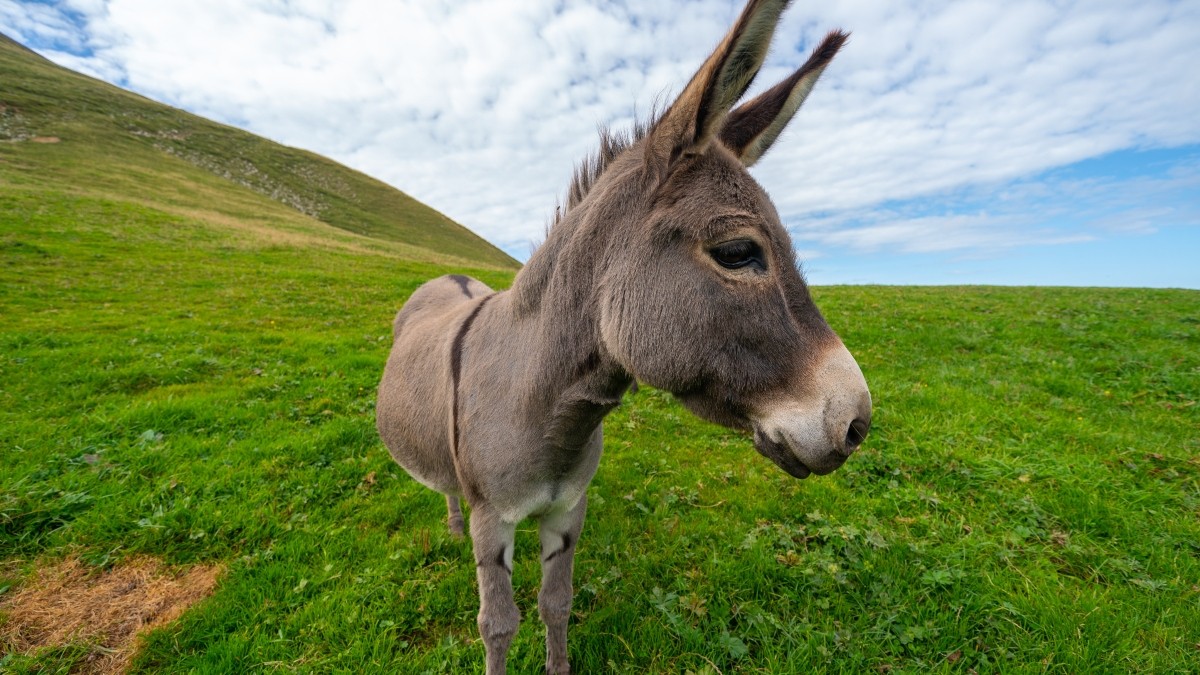
Hugs, Hooves, and Happiness: Newborn Donkey Steals Hearts by Demanding Affection [Video]
-

 Cute Animals3 years ago
WATCH: A German Shepherd’s Surprising Parenting Instinct for Lost Ducklings!
-

 Cute Animals3 years ago
Petty Pup Pulls Off Hilarious Bone Heist [Video]
-

 Cute Animals3 years ago
“Pure Love”: Adopted Rescue Dog Can’t Hide How Grateful He Is [Video]
-

 Heroes3 years ago
A Lost Dog’s Bark Leads to a Lifesaving Discovery
-

 Cute Animals3 years ago
Tiny but Mighty: Cat with Dwarfism Becomes Internet Star as Owners Adapt Backyard for Her Comfort
-

 Cute Animals3 years ago
Adorable Puppy Steals Hearts After a Tiring Swim [Video]