Smile
Serendipitous Fossil Rediscovery Reveals Epic Swim

Quick Smiles:
- Giant salamander ancestors swam 250 million years ago from Norwegian Arctic to Australia.
- 1960s fossils traveled world before serendipitous rediscovery unites them with home.
- Temnospondyls survived massive extinctions, showcasing ancient resilience.
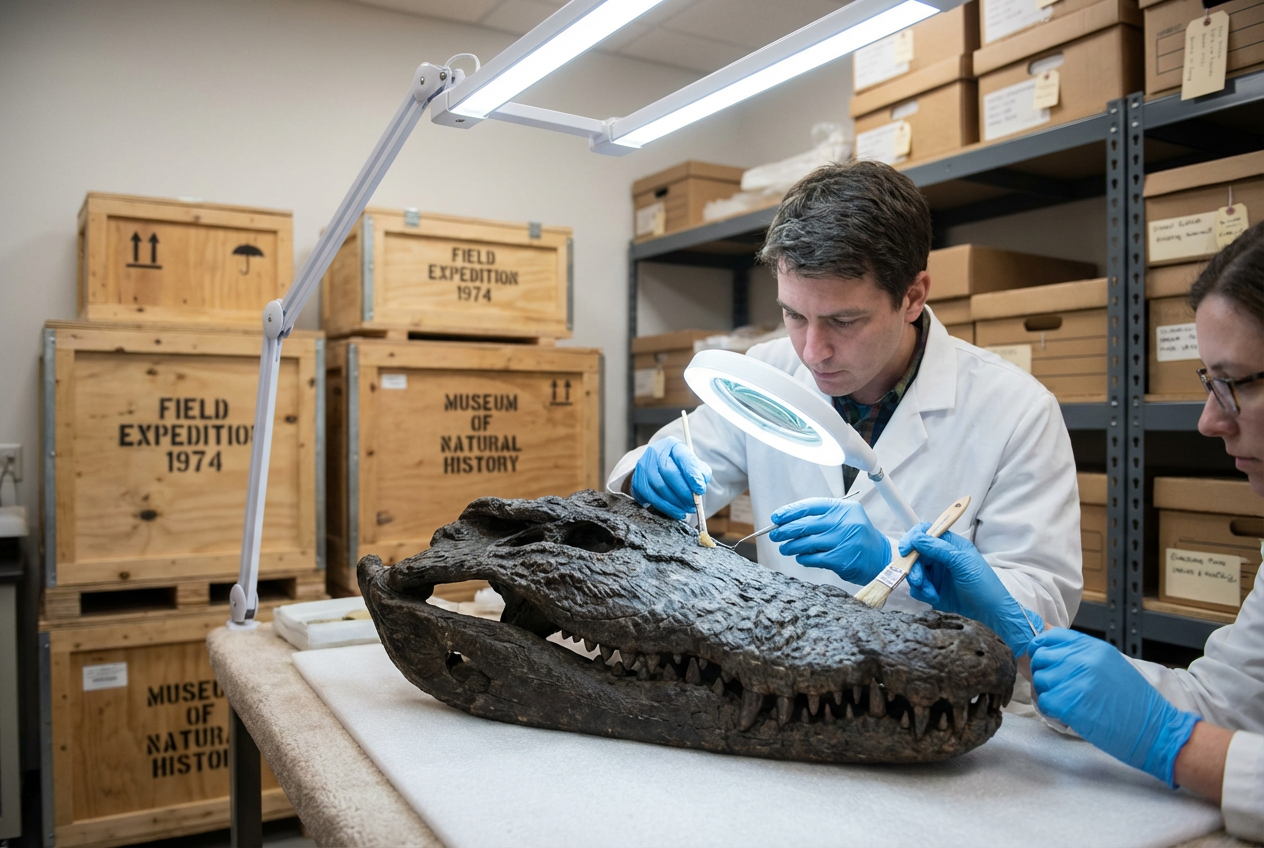
Ancient amphibian Aphaneramma made an incredible journey across ancient oceans, linking today’s Norway and Australia. Discovered in 1960 on Noonkanbah Station in Australia’s Kimberley region, the fossils were initially misidentified and shipped worldwide before being rediscovered.
Australian paleontologists now celebrate this fortunate reunion, correcting the family tree of these remarkable marine creatures.
“The Aphaneramma’s got a head like a crocodile, a body like a giant salamander, pretty pointy teeth … it would have been a very active predator in the water,” said Lachlan Hart, a lecturer in paleontology at the University of New South Wales.
“Temnospondyls are a really important group of animals because they survived two of the big five mass extinction events that have happened in Earth’s history,” Dr. Hart told ABC News AU. “Including the largest one that ever happened … and that’s where about 90% of all living things were wiped out.”
Share this heartwarming tale of ancient adventure and modern discovery with friends!

-

 Cute Animals3 years ago
Puppy Love Patrol: Service Dog Swoons Over K9 Officer Neighbor
-
 Cute Animals3 years ago
Hugs, Hooves, and Happiness: Newborn Donkey Steals Hearts by Demanding Affection [Video]
-

 Cute Animals3 years ago
WATCH: A German Shepherd’s Surprising Parenting Instinct for Lost Ducklings!
-

 Cute Animals3 years ago
Petty Pup Pulls Off Hilarious Bone Heist [Video]
-

 Cute Animals3 years ago
“Pure Love”: Adopted Rescue Dog Can’t Hide How Grateful He Is [Video]
-

 Heroes3 years ago
A Lost Dog’s Bark Leads to a Lifesaving Discovery
-

 Cute Animals3 years ago
Tiny but Mighty: Cat with Dwarfism Becomes Internet Star as Owners Adapt Backyard for Her Comfort
-

 Cute Animals3 years ago
Adorable Puppy Steals Hearts After a Tiring Swim [Video]