Heroes
Three Teens Just Solved a Global Crisis Using Something Hiding in Every Kitchen

Quick Smiles:
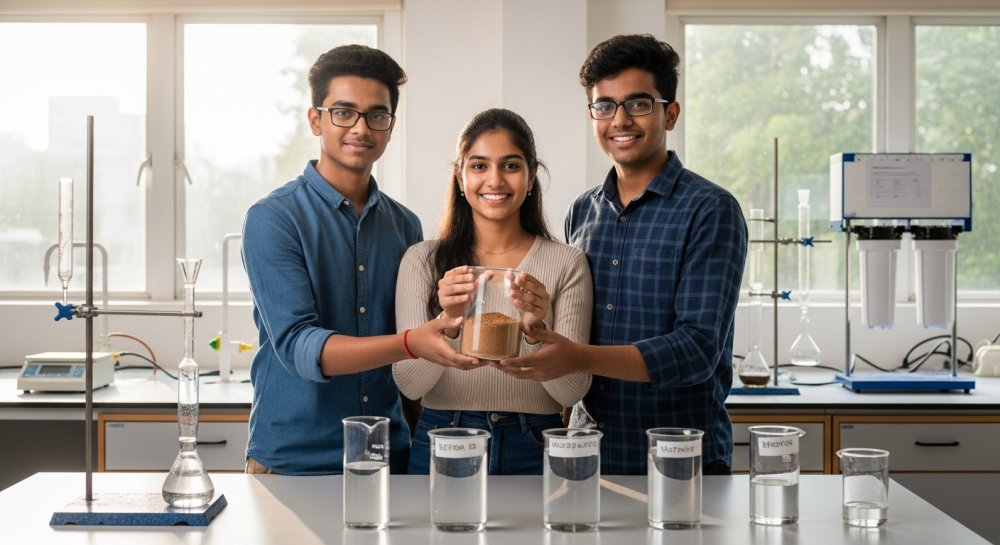
- Three 16-year-olds from India discovered that tamarind seed powder naturally removes microplastics from water
- Their kitchen-inspired solution won the prestigious Earth Prize for Asia, beating thousands of global competitors
- The biodegradable method works better than synthetic chemicals and costs almost nothing to produce
When three Indian teenagers decided to tackle one of the planet’s biggest environmental challenges, they never imagined the answer would be sitting right in their kitchen pantries. But that’s exactly where 16-year-olds Vivaan Chhawchharia, Ariana Agarwal, and Avyana Mehta found their breakthrough solution to microplastic pollution.
The trio discovered that powdered tamarind seed — a common ingredient in South Asian cooking — acts as a powerful natural agent for removing microplastics from water. Their innovative approach has earned them the Earth Prize for Asia, a prestigious international award recognizing young environmental innovators.
Microplastics have infiltrated every corner of our planet, from the deepest oceans to the air we breathe. These tiny plastic particles, often invisible to the naked eye, pose serious threats to marine life, ecosystems, and human health. Traditional removal methods are expensive, energy-intensive, and often rely on synthetic chemicals that create their own environmental problems.
The young scientists took a different approach, inspired by natural water purification methods used for centuries in India. Tamarind seeds contain natural polymers that cause microplastic particles to clump together, making them easy to filter out of water. The process is remarkably simple, completely biodegradable, and costs a fraction of conventional filtration systems.
“We wanted to find a solution that anyone could use, anywhere in the world,” explained the team. “Tamarind is abundant, affordable, and sustainable. It made perfect sense.”
Their research demonstrated impressive results. The tamarind powder successfully removed up to 95% of microplastics from contaminated water samples in laboratory tests. Unlike synthetic flocculants, the tamarind-based solution leaves no harmful residue and breaks down naturally in the environment.
The Earth Prize judges were particularly impressed by the innovation’s scalability and accessibility. The method could be deployed in water treatment facilities, industrial settings, or even adapted for household use in areas with limited resources. Because tamarind trees grow widely across tropical and subtropical regions, the raw material is readily available in many of the places most affected by plastic pollution.
The three students spent months perfecting their formula, testing different concentrations and application methods. They collaborated with local universities and environmental organizations to validate their findings and explore real-world applications. Their dedication paid off when they were selected from thousands of entries representing dozens of countries.
“These young innovators exemplify the kind of creative, practical thinking we need to address global environmental challenges,” said Earth Prize organizers. “They’ve shown that solutions don’t always require cutting-edge technology — sometimes the answer has been right in front of us all along.”
The team plans to use their prize money to further develop their technology and explore partnerships with water treatment facilities and conservation organizations. They’re also working on educational programs to teach others about microplastic pollution and natural remediation methods.
Their success represents a growing movement of young scientists and activists refusing to accept that environmental crises are unsolvable. By combining traditional knowledge with scientific methodology, they’ve created something truly remarkable: a solution that’s effective, sustainable, and accessible to communities worldwide.
The discovery serves as a powerful reminder that innovation can come from anywhere — even from teenagers experimenting with ingredients from their family kitchens. As the world continues to grapple with plastic pollution, these three young scientists have given us something increasingly precious: hope, backed by science and grounded in practical solutions.

-

 Cute Animals3 years ago
Puppy Love Patrol: Service Dog Swoons Over K9 Officer Neighbor
-
 Cute Animals3 years ago
Hugs, Hooves, and Happiness: Newborn Donkey Steals Hearts by Demanding Affection [Video]
-

 Cute Animals3 years ago
WATCH: A German Shepherd’s Surprising Parenting Instinct for Lost Ducklings!
-

 Cute Animals3 years ago
Petty Pup Pulls Off Hilarious Bone Heist [Video]
-

 Cute Animals3 years ago
“Pure Love”: Adopted Rescue Dog Can’t Hide How Grateful He Is [Video]
-

 Heroes3 years ago
A Lost Dog’s Bark Leads to a Lifesaving Discovery
-

 Cute Animals3 years ago
Tiny but Mighty: Cat with Dwarfism Becomes Internet Star as Owners Adapt Backyard for Her Comfort
-

 Cute Animals3 years ago
Adorable Puppy Steals Hearts After a Tiring Swim [Video]