Cute Animals
Ancient Human Ancestor Discovered in Morocco

Quick Smiles:
- Fossils from 700,000 years ago found in a Moroccan cave may reveal important clues about our evolutionary past.
- Scientists uncovered jawbones, teeth, and more, suggesting a lush landscape once thrived where the desert now lies.
- The remains could help bridge gaps in our understanding of ancient human migration and ancestry.
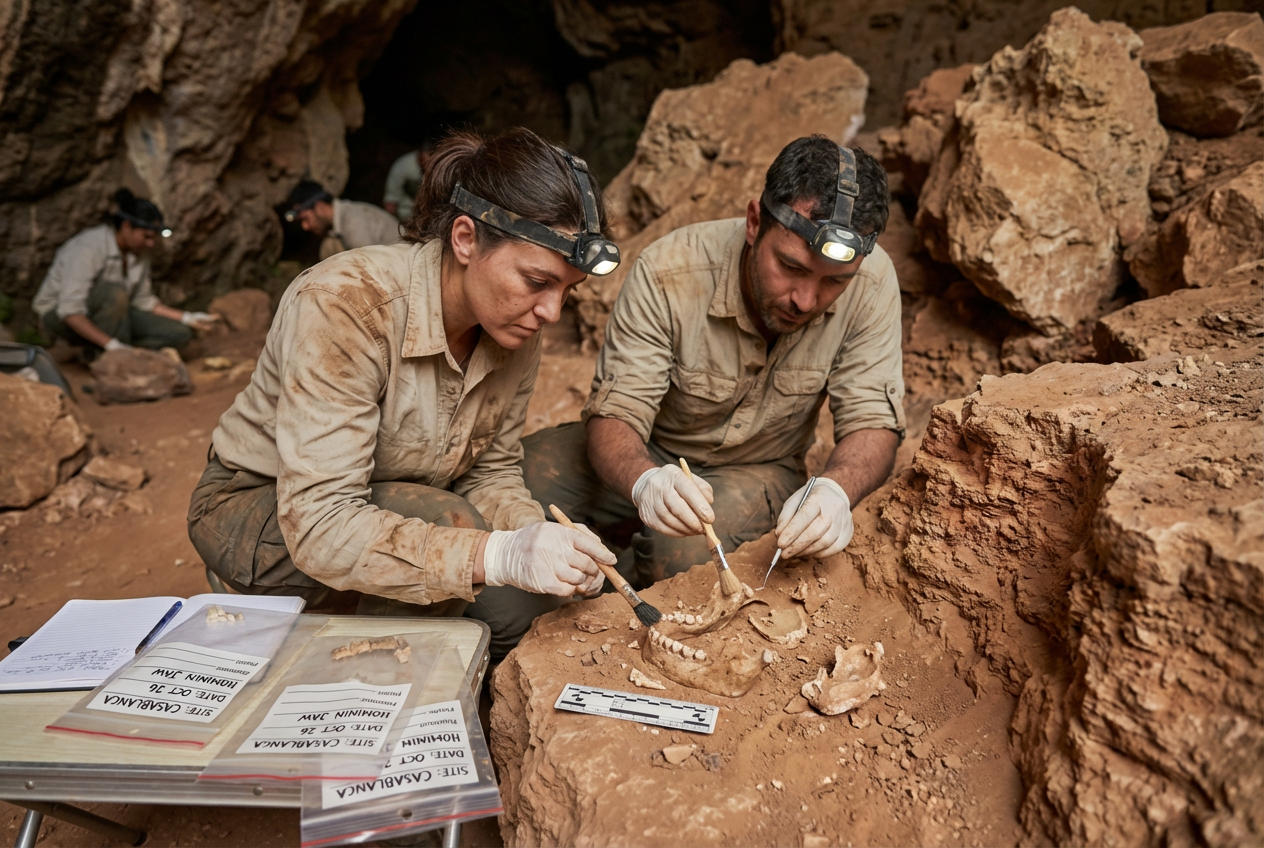
An exciting fossil discovery in Morocco is shining new light on a pivotal time in human evolution. Researchers found fossils dating back 700,000 years in a cave near Casablanca, including adult and child jawbones, teeth, and a vertebra attached to a predator-bitten femur.
The ancient landscape around the cave was once a flourishing wetland, home to animals like crocodiles, hippos, and large cats, in stark contrast to today’s arid scenery.
The fossils, resembling those previously discovered at Gran Dolina in Spain, may belong to a population from the era when African and Eurasian hominins diverged.
Jean-Jacques Hublin, lead researcher and anthropologist, believes these findings support the theory of a deep African origin for modern humans.
While the puzzle of early human migration remains unsolved, this discovery provides valuable pieces, highlighting the diversity and complexity of our shared ancestry.
“Human evolution is largely a history of extinctions,” said Dr. Hublin. “It is difficult to say whether the small Grotte à Hominidés population left any descendants, but it provides a good picture of what the last common ancestor may have been like.”
Every find like this brings us a step closer to understanding our remarkable journey across the ages.

-

 Cute Animals2 years ago
Puppy Love Patrol: Service Dog Swoons Over K9 Officer Neighbor
-
 Cute Animals3 years ago
Hugs, Hooves, and Happiness: Newborn Donkey Steals Hearts by Demanding Affection [Video]
-

 Cute Animals2 years ago
WATCH: A German Shepherd’s Surprising Parenting Instinct for Lost Ducklings!
-

 Cute Animals3 years ago
Petty Pup Pulls Off Hilarious Bone Heist [Video]
-

 Heroes2 years ago
A Lost Dog’s Bark Leads to a Lifesaving Discovery
-

 Cute Animals3 years ago
“Pure Love”: Adopted Rescue Dog Can’t Hide How Grateful He Is [Video]
-

 Cute Animals3 years ago
Tiny but Mighty: Cat with Dwarfism Becomes Internet Star as Owners Adapt Backyard for Her Comfort
-

 Cute Animals2 years ago
Adorable Puppy Steals Hearts After a Tiring Swim [Video]