Cute Animals
Magical Isotopes Shield Rhinos from Poachers

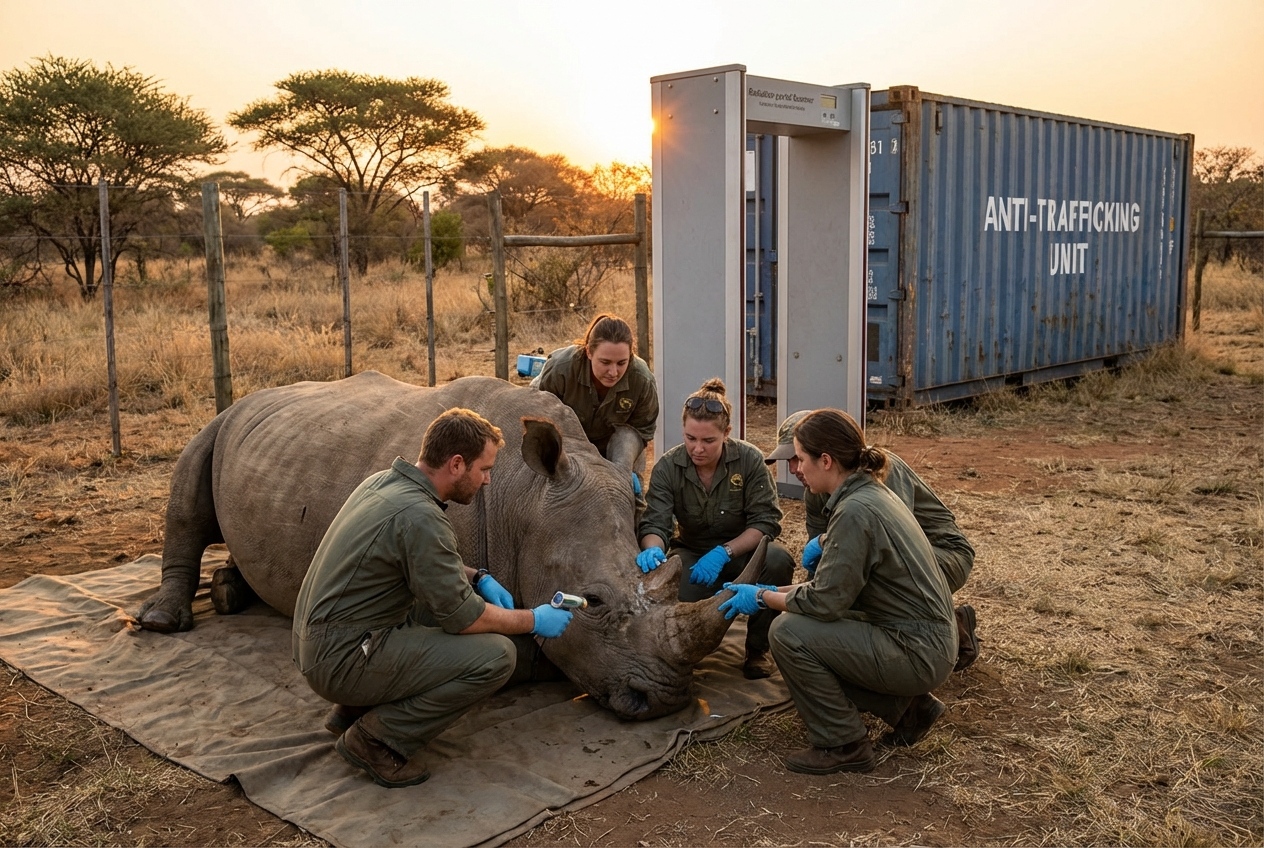
Quick Smiles:
- Rhisotope Project embeds safe radioactive isotopes into rhino horns.
- Global detectors at borders spot them easily, halting trafficking.
- Tests prove completely safe for rhinos, offering hope.
South Africa’s innovative Rhisotope Project, led by the University of Witwatersrand, is rolling out a clever strategy to protect rhinos after six years of development.
Harmless isotopes make horns detectable by worldwide radiation scanners at ports and airports, designed to prevent nuclear threats.
Even if removed, traces linger on horns and anything they touch, confirmed effective even inside shipping containers.
“Our goal is to deploy the Rhisotope technology at scale to help protect one of Africa’s most iconic and threatened species. By doing so, we safeguard not just rhinos but a vital part of our natural heritage,” Jessica Babich, CEO of the Rhisotope Project, said.
Conservationists hail it as a “magical idea,” born from Professor James Larkin’s radiology expertise.
Rigorous six-month monitoring and biological tests on 20 rhinos at a UNESCO reserve showed no harm.
“We have demonstrated, beyond scientific doubt, that the process is completely safe for the animal and effective in making the horn detectable through international customs nuclear security systems,” Professor Larkin said.
This empowers private rhino owners too, who hold most of South Africa’s rhinos outside national parks.
Celebrate these brilliant minds saving white and black rhinos—share the joy of wildlife triumphs today!

-
 Cute Animals3 years ago
Puppy Love Patrol: Service Dog Swoons Over K9 Officer Neighbor
-
 Cute Animals3 years ago
Hugs, Hooves, and Happiness: Newborn Donkey Steals Hearts by Demanding Affection [Video]
-

 Cute Animals3 years ago
WATCH: A German Shepherd’s Surprising Parenting Instinct for Lost Ducklings!
-

 Cute Animals3 years ago
Petty Pup Pulls Off Hilarious Bone Heist [Video]
-

 Cute Animals3 years ago
“Pure Love”: Adopted Rescue Dog Can’t Hide How Grateful He Is [Video]
-

 Heroes3 years ago
A Lost Dog’s Bark Leads to a Lifesaving Discovery
-
 Cute Animals3 years ago
Tiny but Mighty: Cat with Dwarfism Becomes Internet Star as Owners Adapt Backyard for Her Comfort
-

 Cute Animals3 years ago
Adorable Puppy Steals Hearts After a Tiring Swim [Video]